Mealtime Assistance
February 17, 2026
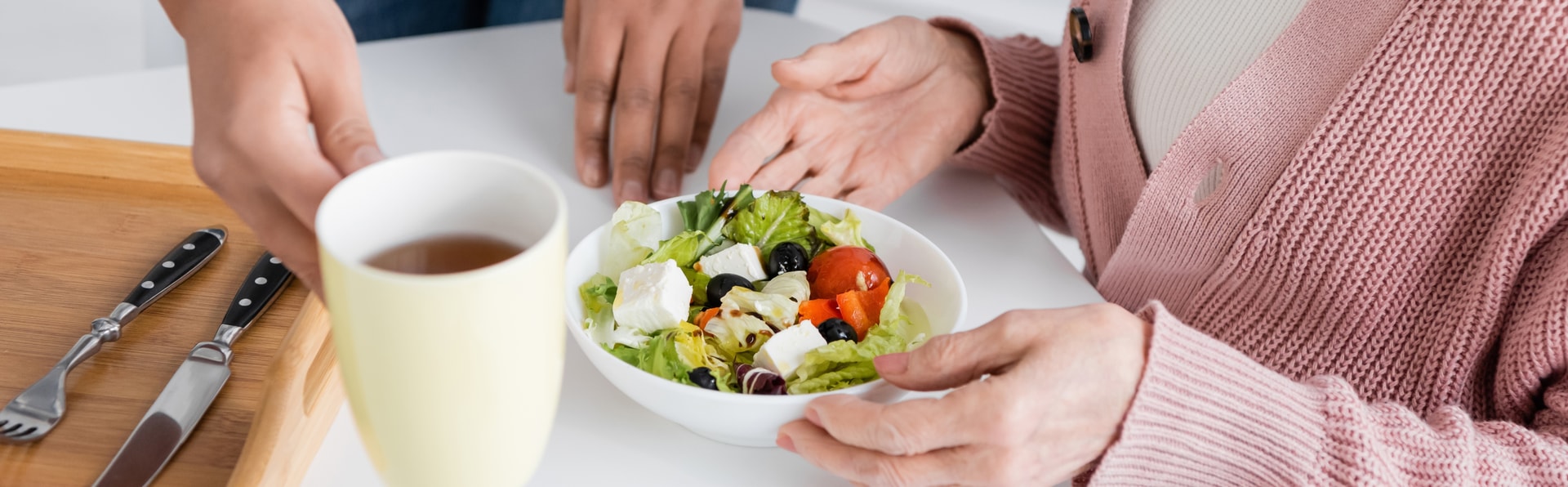
Mealtime Assistance
Losing the ability to eat and drink independently can be a result of dementia or impaired cognition, arthritis in the hands, vision impairment or poor appetite.
If not carefully monitored, older adults with these conditions may suffer from malnutrition which can lead to complications like nasty infections and poor wound healing. Mealtime assistance ensures that people who struggle with independent eating, meet their nutritional needs.
The assistance needed at mealtimes will vary from person to person and even from day to day for the same person.
Here are some ways that eating can be assisted:
- Providing an unhurried, relaxed time in which to eat
- Help to source adapted cutlery to make eating easier
- Opening food packets and cutting food into bite-sized pieces
- Assistance with dentures – cleaning and assistance to insert them if needed
- Providing information about the food (particularly important for those who are vision-impaired or eating a soft diet)
- Encouragement to drink adequate fluids
- Full eating assistance
- Help to clean up hands, face and surfaces following eating
Eating assistance aims to always maintain dignity while promoting good nutritional intake.
The carers at InPlace Care can help Mealtime in many ways, search for the right carer at www.inplacecare.com.au to make sure every support is provided to those who need Mealtime assistance.